
VR on a Real Climbing Wall
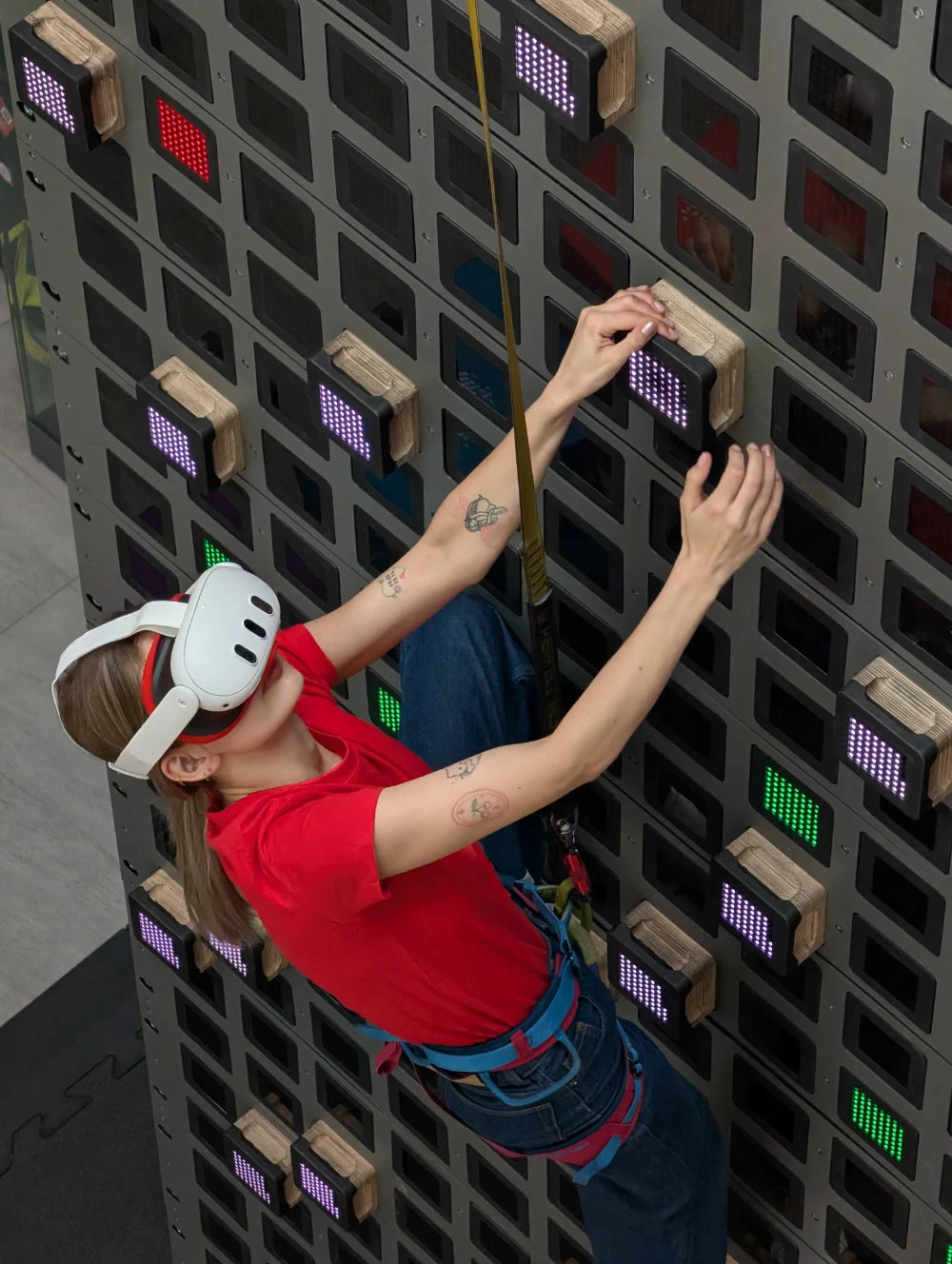
Bringing virtual reality to a real 8-metre climbing wall - without compromising safety or immersion.
Game Mechanics Designer
VR Gameplay
Phygital Entertainment
User Testing
3D Modelling
Sound Design
Safety UX
My Role & Responsibilities
Crafting the atmosphere, desk-to-desk
As the Lead UX and Game Mechanics Designer, I was responsible for the end-to-end immersion. I designed the rules, modelled 3D assets, and curated the soundscapes to ensure the digital world felt as tangible as the physical wall.
I didn't just hand off designs. I worked desk-to-desk with the developers in ultra-short feedback loops, mutually inspiring each other to iterate rapidly from the first PoC to the final product.
-
Game Mechanics
Designed the rules, difficulty scaling, and interactive elements for games like 'Stars' (relaxation) and 'Rocks' (agility). -
3D & Sound Design
Created 3D models and curated the auditory experience (SFX and music) to deepen the sense of presence. -
Iterative Testing
Ran continuous playtests from early concepts to the final build, uncovering hardware limits and refining physical ergonomics. -
Agile Collaboration
Collaborated with engineering in tight, rapid loops, instantly testing ideas on the wall and turning constraints into features.
The Challenge
Creating an unbroken illusion
Virtual reality is notoriously isolating and prone to inducing motion sickness, especially when physical movement is simulated. Our goal was to build a phygital experience where users physically climb a real 8-metre wall while completely immersed in a VR headset.
The core challenge was achieving perfect immersion. We had to navigate undocumented hardware limitations of the headsets, figure out the minimum safe age for players, and manage user expectations before they even put the goggles on.
-
Hardware Constraints
Discovering and finding creative workarounds for undocumented VR headset limitations to maintain an unbroken digital illusion. -
Motion Sickness
Ensuring perfect synchronisation between the user's physical exertion and visual feedback to eliminate inner-ear conflict. -
Pre-climb Expectations
Designing the onboarding experience to properly align what players expected with the actual physical reality of the game. -
Age Accessibility
Testing and adapting cognitive load, difficulty levels, and ergonomics to establish a safe minimum age limit for players.
Preview
Designing a controller-free VR ecosystem
SkyWall VR redefines how we interact with virtual reality. By utilising a grid of interactive holds, we turned the wall itself into the controller. Here is how I built a compelling, atmospheric experience on top of a massive physical interface.
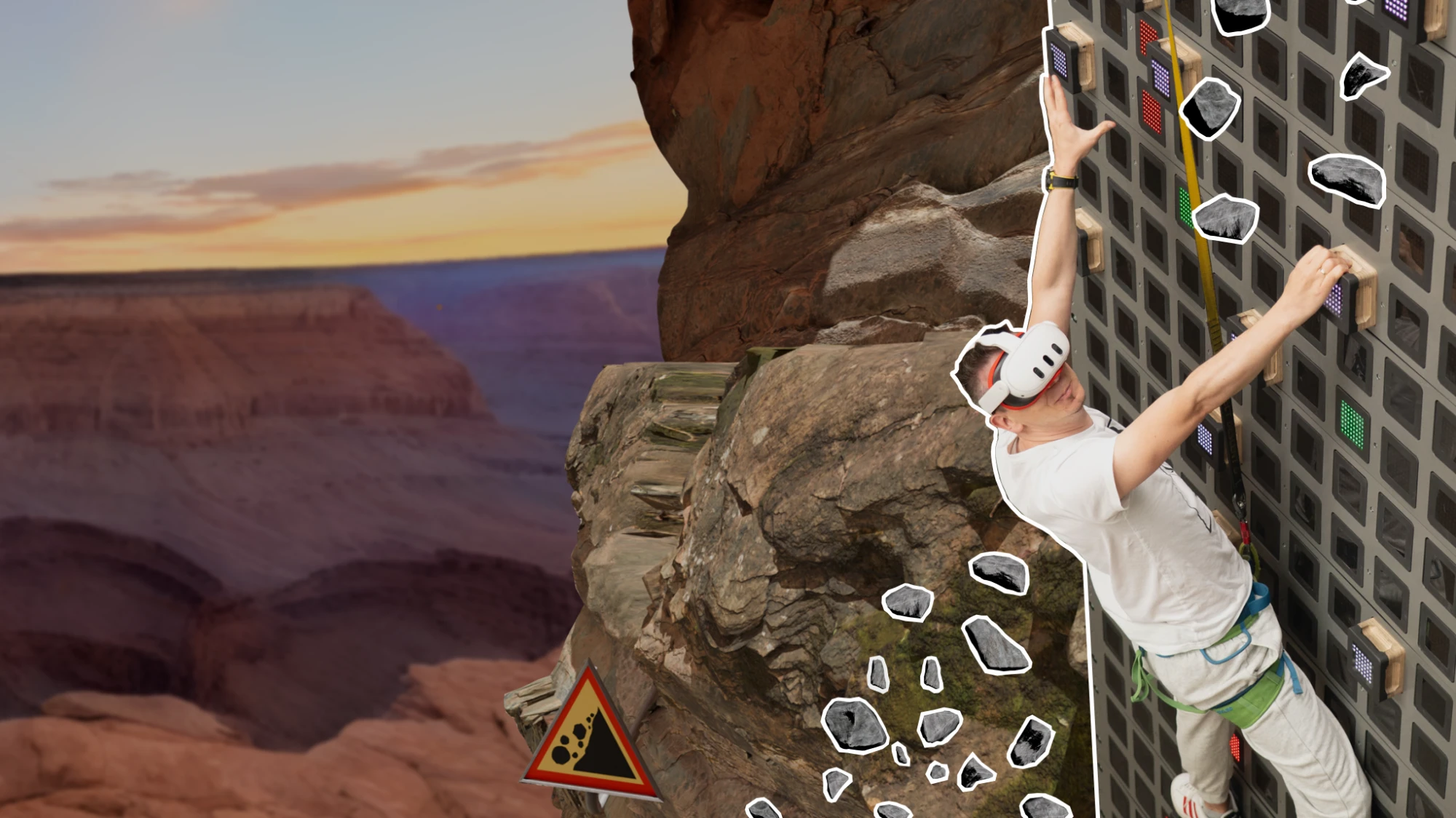
High-stakes dodging on mountain peaks
To test agility and elevate the heart rate, I introduced dynamic hazards in the 'Rocks' game. Players climb a towering mountain while dodging falling virtual boulders.
The mechanical challenge was giving players enough visual warning in VR to physically move their bodies out of the way in the real world, balancing the thrill of the game with the climber's physical exhaustion.
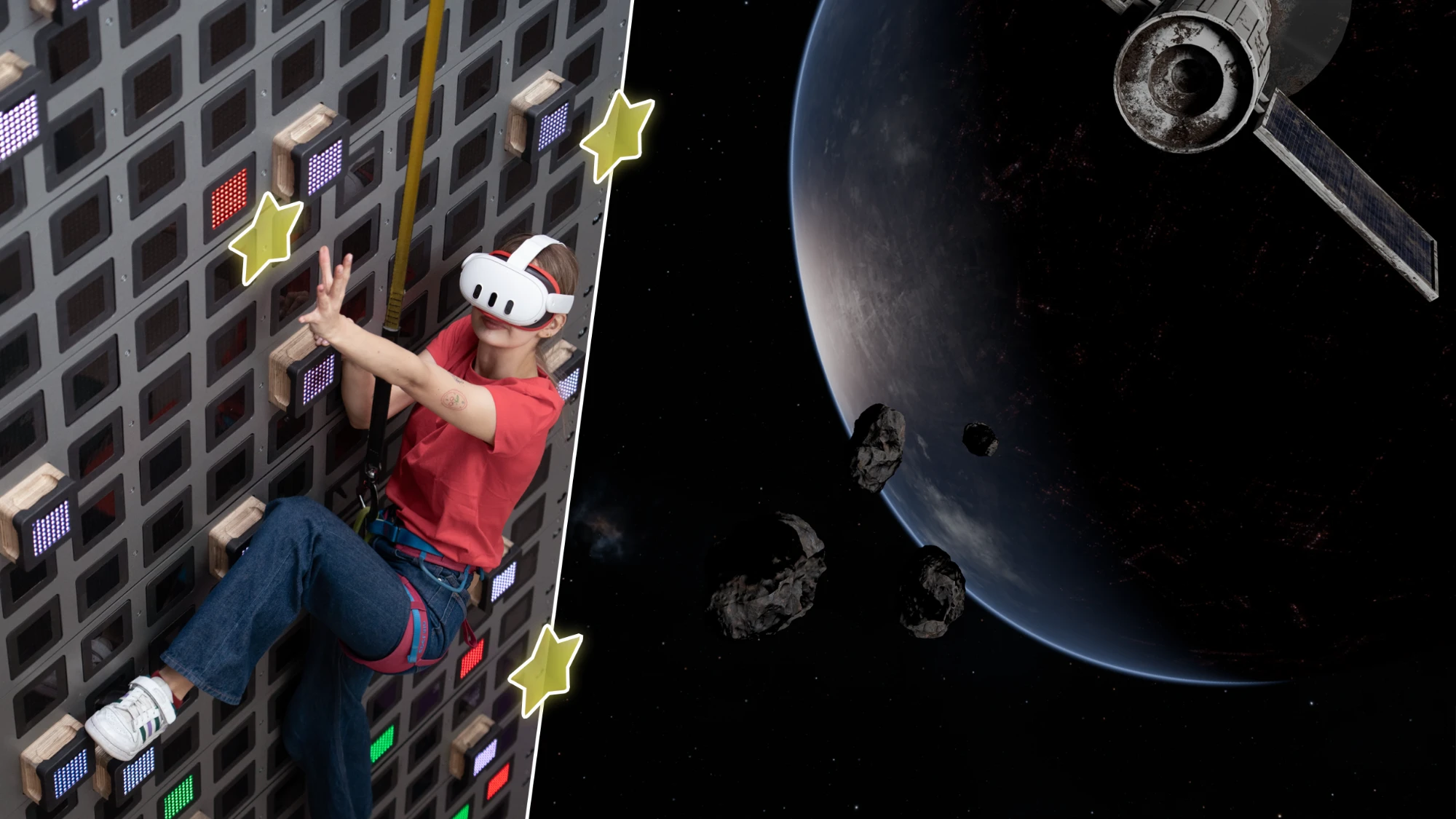
Zero-pressure exploration in Cosmos
Not all climbing needs to be a race against the clock. For the 'Stars' game mode, I designed a zero-pressure cosmic environment aimed at fluid movement and relaxation.
Players collect virtual stars at their own pace. The UX focus was on breathtaking visuals and smooth transitions, rewarding exploration over speed. This proved highly effective for introducing first-time VR users to the wall.
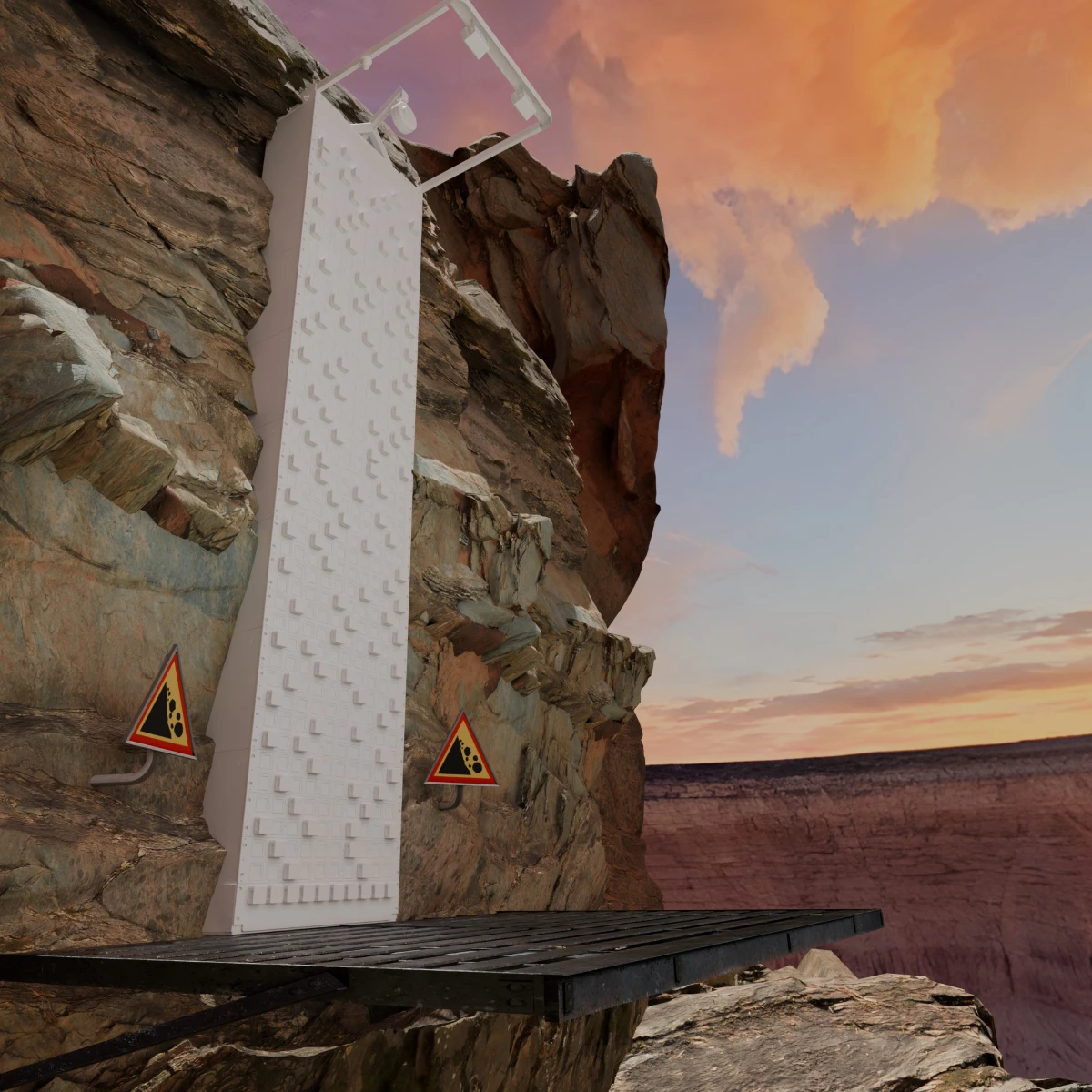
Crafting a believable world
Immersion isn't just visual - it's auditory and psychological. By combining custom 3D models with carefully selected sound design, we created an atmosphere that masked the physical room and transported the climber.
Working desk-to-desk with developers allowed us to instantly test these assets on the physical wall, adjusting sizes, lighting, and audio cues to perfectly match the player's spatial awareness.
Impact and continuous iteration
A 100% motion-sickness-free experience.
Through continuous playtesting and rapid prototyping, we solved one of VR's biggest hurdles, opening the platform to a massive new audience of families and climbing enthusiasts.
Age Accessibility
Successfully defined safe age limits and adapted mechanics to accommodate the reach and comprehension of young children.
Zero Motion Sickness
Achieved a nausea-free experience by ensuring visual movement only ever happens when the user exerts actual physical effort.
Managed Expectations
Refined the onboarding process to seamlessly transition players from the physical reality of the climbing gym into the virtual world.
High Replayability
Introduced scalable difficulty levels, turning a one-time VR novelty into a modern climbing workout that users return to.
The Future of Phygital Entertainment
SkyWall VR proved that the best VR controllers are our own bodies.
Working on this project forced me to unlearn traditional screen-based UX. Designing for an 8-metre vertical surface where the user is physically exhausted requires a completely different approach to cognitive load, sound, and interface design.
The result is an experience that doesn't just simulate an adventure - it physically demands it. It bridged the gap between gaming and sports in a way that feels completely natural.
Let's work together.
Looking for a senior designer who thinks like a product owner and ships in code? Let's talk about complex platforms, design systems, or phygital products.